
Hogg Middle School Tour
Begin at Hogg Front Doors, Self Guided with Hogg NJHS Volunteers at each stop 11:45-1:30
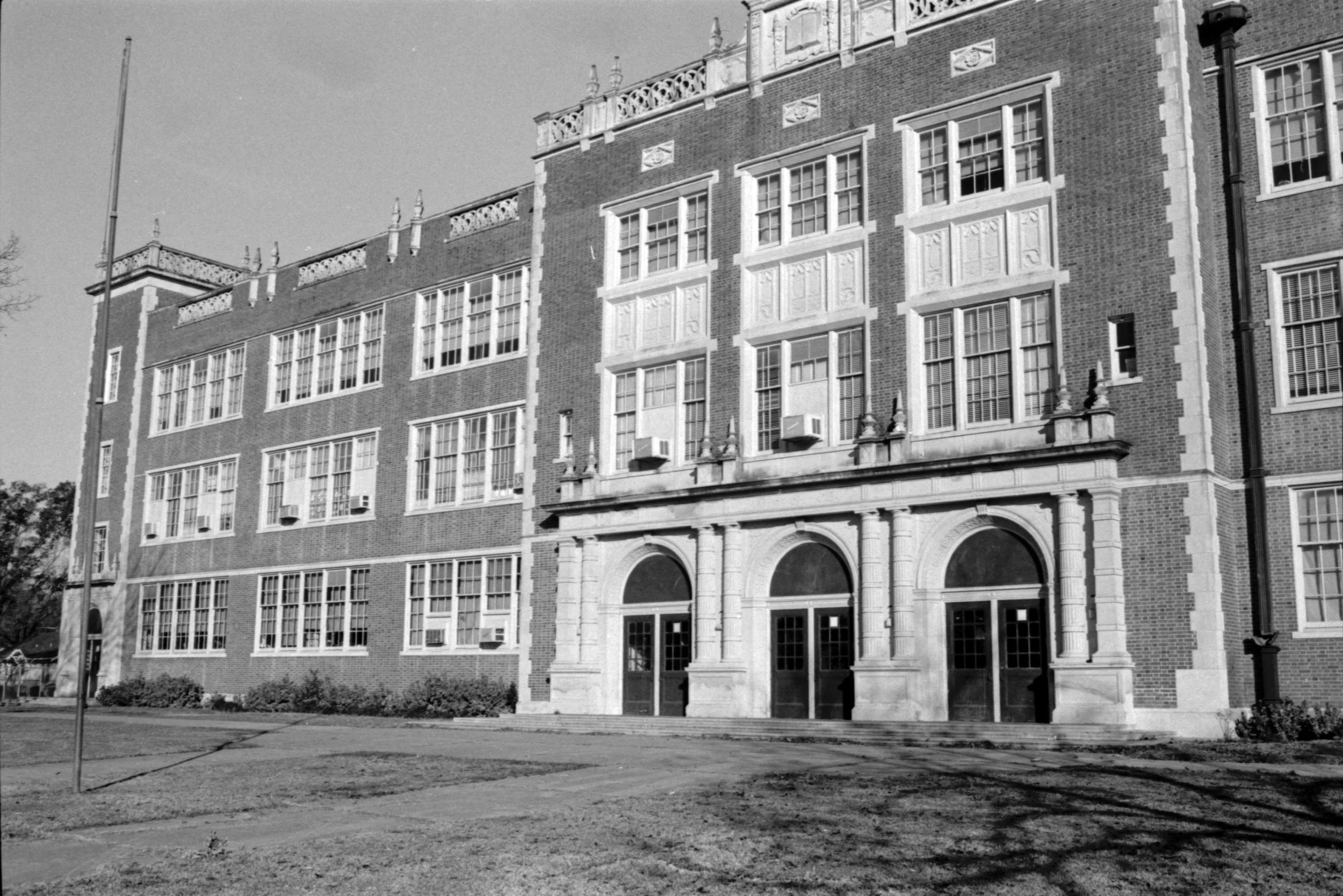
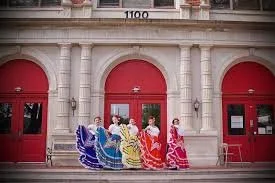
Stop 1: The Foyer
Theme: Designed to endure – where Hogg’s legacy begins
To begin, imagine Houston just after World War I. The city was growing rapidly, and neighborhoods like Houston Heights were expanding as new families moved into the area. With that growth came an urgent need for more schools.
At the time, the school system was led by Edison Oberholtzer, the first superintendent of the Houston Independent School District. Under his leadership, the district passed its first major school construction bond, which funded several new campuses across Houston.
One of those schools was James S. Hogg Junior High School, which opened on March 12, 1926, with 887 students in the 7th, 8th, and 9th grades—students who were referred to at the time as “scholastics.”
Just to the right of the entrance (outside), you can see the building’s cornerstone. It marks the era when this school was built and honors Superintendent Oberholtzer, whose leadership helped expand high-quality and equitable public education across Houston.
The school is named for James Stephen Hogg (March 24, 1851 – March 3, 1906), the first native-born governor of Texas. In the early 1900s, members of the Hogg family purchased large tracts of land across the growing city—much of it inside what is now Interstate 610—with the goal of preserving green space as Houston expanded. Some of that land was eventually used for parks and public spaces, including this school site.
The architecture itself reflects the educational ideals of the 1920s. Hogg was designed in the Neoclassical style, inspired by Greek and Roman architecture and commonly used for schools and civic buildings because it symbolized knowledge, order, and civic pride.
If you look closely, you’ll see details like fluted Doric columns, arched doorways, decorative friezes, and the classical entablature above the entrance inscribed with the school’s name.
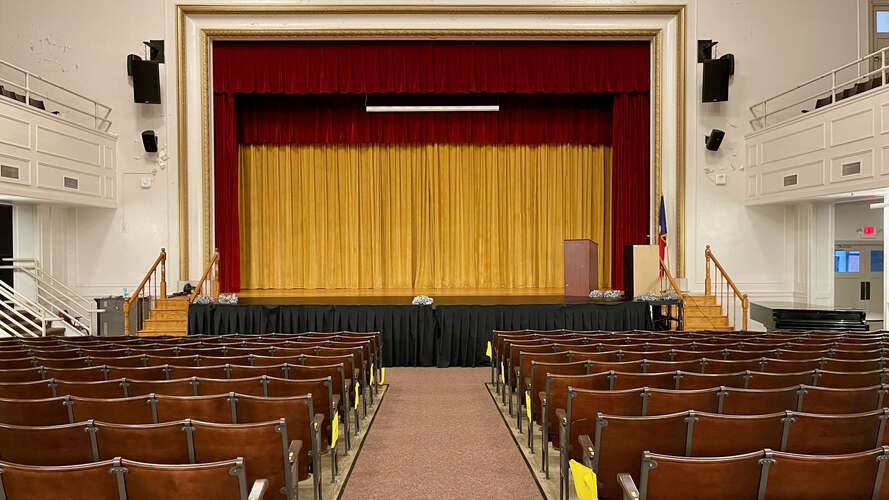
Stop 2: Hogg Auditorium and Theater Black Box
Theme: Performing Arts – the cultural heart of Hogg
Auditorium
As we step into this space, it helps to remember that schools built in the 1920s were designed with a progressive vision of education. Leaders believed schools should develop the whole student—academically, physically, and creatively. Because of that philosophy, campuses like James S. Hogg Junior High School were built with facilities that were considered state-of-the-art at the time, including a gymnasium, swimming pool, library, and a large auditorium.
In schools of this era, the auditorium was often the cultural heart of the campus. It was where students gathered for assemblies, plays, musical performances, and community events. Architecturally, these spaces were designed to feel formal and inspiring, often with high ceilings, a raised proscenium stage, and acoustics designed so every student could hear and see the performance.
Student performing arts were already thriving here in the 1920s. Students regularly staged theatrical skits and musical programs. A 1927 article in the Houston Chronicle praised one Hogg performance for its “elaborate stage settings, rich costuming, and well-rehearsed characters,” calling it one of the best entertainments presented by the schools that semester.
The auditorium itself has evolved over time. It was renovated in 1979 and again in 2013 to support modern performances, such as the Hogg Fall 2025 production of After Juliet.
Black Box Theater
For those who may not be familiar with the term, a “black box” is a small, flexible performance space used in theater. The room is typically simple and dark, allowing directors and students to arrange the stage and audience in different ways. Because the audience sits close to the performers, it creates a very intimate and immersive theater experience. This is where Dr. Taylor and her theater classes rehearse, experiment, and perform.
This room also carries a special piece of school history. The space was once known as the Anna Sobota Community Center, dedicated in memory of a former student. Anna Sobota attended Hogg in the mid-1990s and was known for her enthusiasm and involvement in school life—participating in theater as well as track, basketball, volleyball, and cheerleading. After Anna passed away in 1999 while a junior at Heights High School, then-Principal Alaniz dedicated this space in her honor. Over the years, the room has served different purposes—including functioning as a computer lab in the early 2000s—before becoming the theater classroom and performance space it is today.
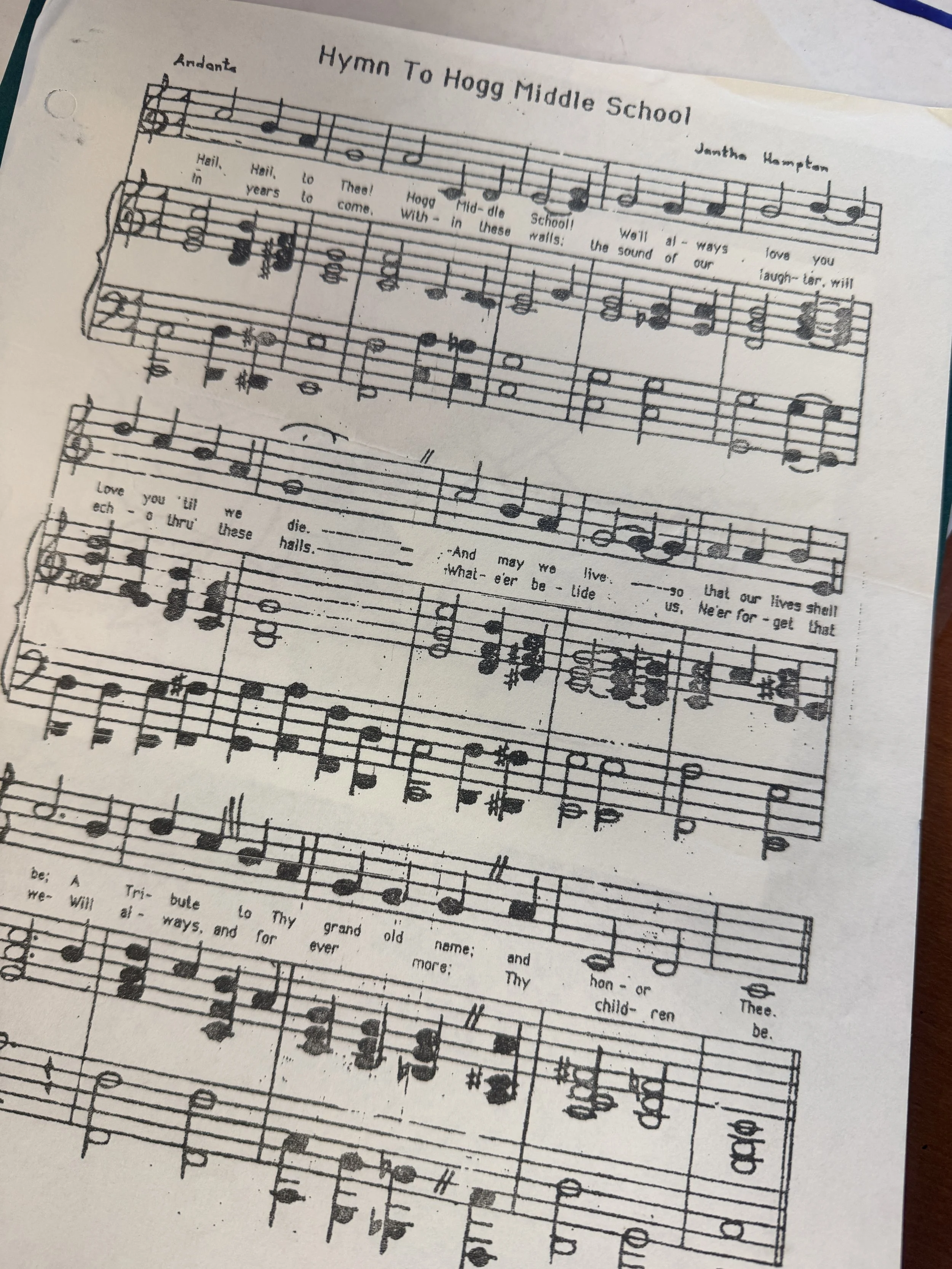
Stop 3: The Band Hall and Graphic Design Classroom
Theme: A celebration of Hogg’s enrichment activities then and now, with a spotlight on a famous alum
As we move down this Hall, we’re standing in an area that reflects something educators in the 1920s strongly believed: that schools should develop the whole student. When schools like this one were redesigned and expanded in the late 1920s, music instruction was considered an essential part of a well-rounded education. Band and music programs helped students learn discipline, teamwork, and creativity—values that are still central to the program today.
That tradition continues here. Under the direction of Mr. Sells, the band program remains an important part of student life, earning awards and recognition over the years. Students also participate in specialty ensembles such as jazz band—which will be performing out front today.
Today, students may take electives like graphic design, culinary arts, and other career-focused classes, learning modern skills that combine art, technology, and practical experience. In this classroom, Ms. Sulewski holds her graphic design classes where students learn to create and problem solve as they complete their assignments.
Reflecting back in the early years of the school—between about 1926 and 1930—students explored creativity in different ways. Classes included clay modeling, bookbinding, and decorative design work, sometimes even cutting designs from thin sheets of lead to decorate books, pottery, and other objects. Students could also experiment with one of the newest technologies of the time - radio!
And student life had its share of unusual clubs as well. There was a Fire Patrol, where students helped promote fire safety around campus, and a group called the Club of Honor, whose mission was—quite formally—to promote “standards of good breeding.”
Together, these programs—past and present—show how schools have long tried to balance academics with creativity, craftsmanship, and character building.
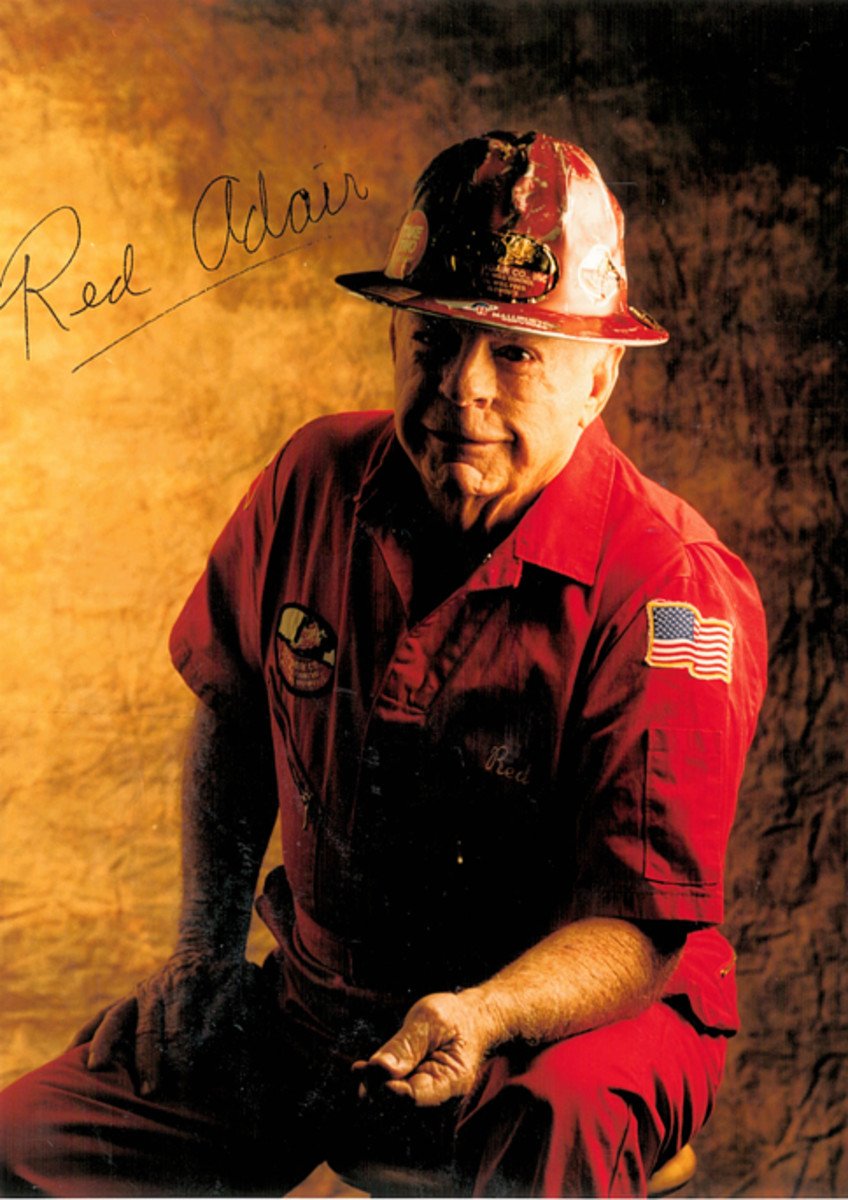
Alum Highlight: Paul "Red" Adair
One of the earliest notable alumni of Hogg Junior High was Paul “Red” Adair, a name that may sound especially familiar to anyone connected to the oil and gas industry.
Red Adair became world-famous for fighting oil well fires—some of the most dangerous fires on earth. These fires occur when a drilling well experiences a blowout and the escaping oil or gas ignites. In the early days of the oil industry, before modern pressure-control technology, these disasters were surprisingly common. And once a well catches fire, it can be incredibly difficult to extinguish.
Adair attended Hogg Junior High in 1929. He earned the nickname “Red” because of his bright red hair and equally fiery personality. Although he left school during the hardships of the Great Depression, he had a natural engineering mind and a fascination with solving the problem of runaway fires.
Over the course of his career, Red Adair and his team extinguished more than 2,000 oil well fires around the world. Along the way, he developed many of the firefighting techniques and technologies that are still used in the industry today.
His most famous work came after the 1991 Gulf War, when retreating Iraqi forces set fire to nearly 700 oil wells in Kuwait. The burning wells created one of the largest environmental disasters in history. Adair and his crews helped bring the fires under control in just a few months—an extraordinary achievement.
His remarkable life even inspired a Hollywood film, Hellfighters, starring John Wayne.
Red Adair eventually returned to Houston, where he spent his later years. Today, he remains one of the most legendary figures in the history of oil-field firefighting—and one of the many remarkable people who once walked the halls of Hogg Junior High.

Stop 4: 1979 S.E Rollins Annex - Mall area/Gym/Cafeteria
Theme: Built for every era, shaped by every generation
As you explore this part of the campus, it’s helpful to remember that Hogg’s history has always been one of growth and adaptation. From the time the school opened in 1926, it has continually evolved to meet the needs of the neighborhood and the city around it.
Students here experienced Houston’s transformation firsthand—from the industrial growth following World War I in the 1920s, through the Great Depression of the 1930s, and into the post–World War II economic boom, when the city expanded rapidly and public schools began to reflect major changes in society, including suburban growth and desegregation.
By the 1970s, Houston was again changing quickly, this time driven by the oil boom. As the city’s population grew, so did the need for updated school facilities. Shortly after Hogg celebrated its 50th anniversary in 1976, the Houston Independent School District began planning another wave of renovations and improvements across the district.
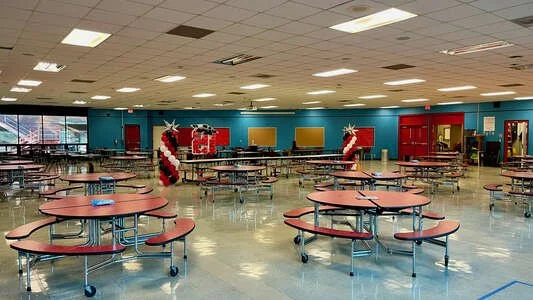
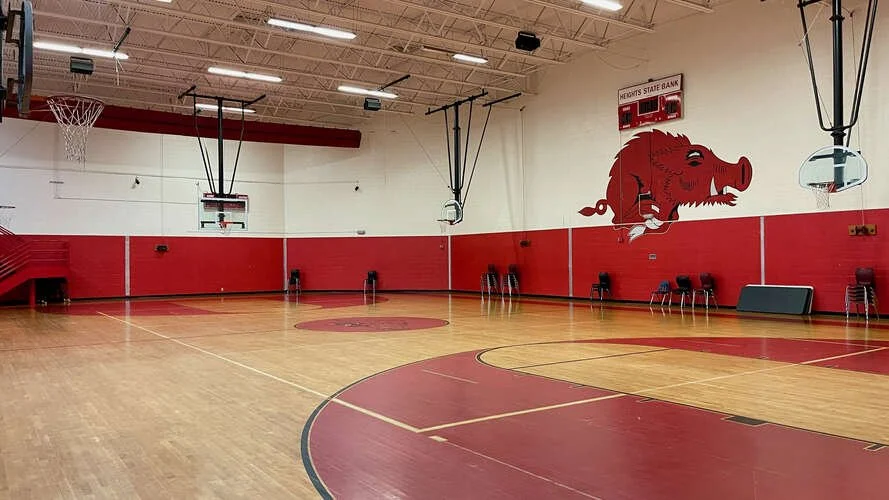
Here at Hogg, that effort led to the construction of a new annex building in 1979, which added a gymnasium, a cafeteria, and a central student gathering space known as the “Mall.” The project cost about 2.5 million dollars, a significant investment in the school’s future. The Mall was designed as a flexible space where students could gather, socialize, and host activities—much like you might see student clubs doing here today.
This addition was dedicated as the S. E. Rollins Annex, honoring Principal S. E. Rollins, who served the school community for more than three decades. Rollins worked at Hogg from the late 1940s through 1981—as a counselor, assistant principal, and finally principal from 1969 to 1981. He was also principal during Hogg’s 50th anniversary celebration in 1976, when members of the community could attend a commemorative dinner for just two dollars per ticket!!
While we are talking about significant renovations, another one you will notice on campus: the two exterior classroom buildings nearby, now used for science classes, were built earlier in 1962 as part of a district-wide effort to modernize junior high schools with improved industrial arts and science laboratories. Also at this time, Hogg was rebranded from Hogg Junior High to Hogg Middle School and began serving students from the 6th through 8th grades.
Together, these additions tell the story of how Hogg has continually adapted—expanding and evolving alongside the city of Houston itself.

Stop 5 : Sports Complex – Karate room, Squash Courts, Natatorium, Weightlifting room
Theme: A century of school pride
At Hogg, athletics have always been an important part of the story—helping generations of students develop teamwork, discipline, and a little school pride along the way. At this stop, we have some of the most unique facilities in the district.
One of the most unusual features for a middle school (and one of the original facilities) is the swimming pool, which has been part of Hogg since the school first opened. Not many public schools—especially middle schools—have their own pools. Just this past February, under Coach Martinez, our 8th grade boys swim team won the 2026 HISD District I Championship!
Hogg has also offered some programs you might not expect in a middle school. Karate, for example, has been part of student life here for decades. Our current athletic coach, Master Cardenas, actually attended Hogg as a student in 1991—the very first year the Kickstart Karate program began here. He later returned to teach karate from 2002 through 2025, meaning his photo appears in Hogg yearbooks as either a student or teacher for nearly 27 years!
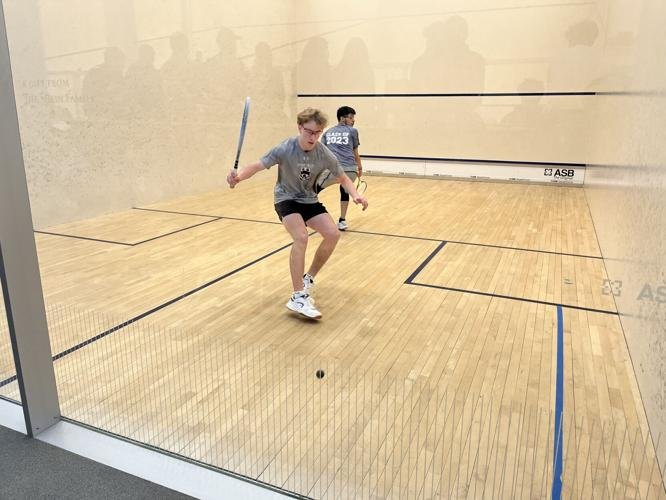
More recently, in 2015, Hogg added another unique facility: squash courts. These were the first squash courts built in a public school in the United States! Coach Zain brings a unique enthusiasm to his squash instruction as part of Hogg's gym class curriculum where he coaches over 200 students daily! In addition, community youths can learn how to play squash here every Monday after school at the Mission Squash Academy for $40.
Upstairs you’ll also find the weightlifting area, another part of Hogg’s athletics program that helps students build strength and confidence alongside traditional sports.
Athletics at Hogg have also been shaped by important figures in the school’s history. In the 1980s and 1990s, the school awarded the Tony Ditta Award to its top student athletes. Ditta served as an assistant principal here and had his own athletic legacy—he was the captain of the University of Houston’s very first football team in 1946.
As you leave this area, take note of the dumbwaiter. This is original to the building and primarily was used to hoist food and supplies to the 3rd floor cafeteria. We will talk more about that later.
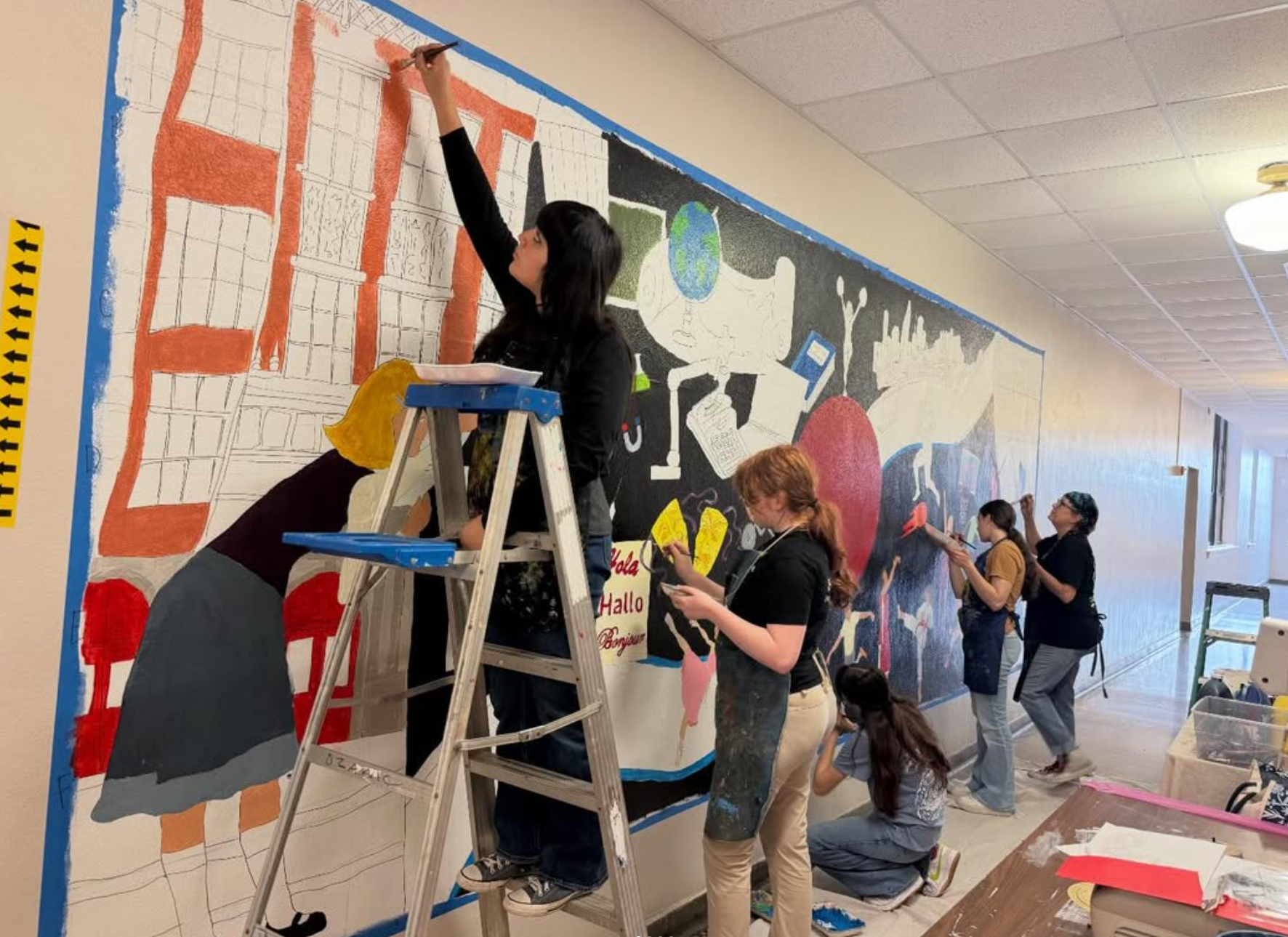
Stop 6: 2nd floor - New Mural created by Ms. Ozanic's Art Club
Theme: Color on the walls, while greatness walks these halls
As we move through this second-floor hallway on our way up to the third floor, take a moment to enjoy the newest mural installation. This vibrant work was created by Ms. Ozanic’s Art Club and reflects the creativity and talent of Hogg students today.
While we pause here, let me share the stories of two accomplished Hogg alumni whose journeys began in these very halls.
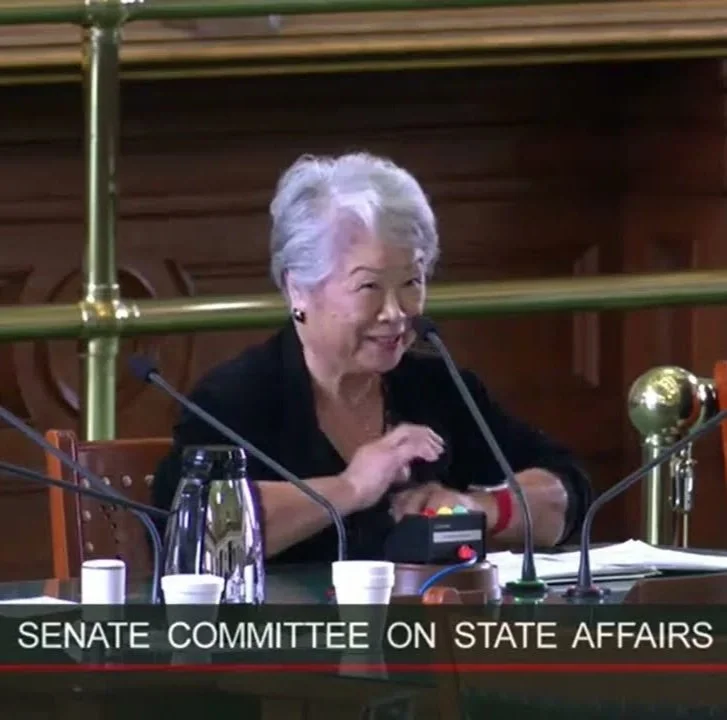
Alum Highlight: Martha Wong
Martha Wong, who attended Hogg in the early 1950s, made history in 2003 by becoming the first Asian American woman elected to the Texas Legislature.
Her amily had moved to Texas in search of better educational opportunities. Martha first attended Field Elementary and later came here to Hogg. At the time, the neighborhood looked a little different than it does today. Her father operated a small grocery store near the intersection of Studewood and Main, and the family lived nearby on 19th Street.
Ms. Wong often recalled the simple routines of growing up in the Heights—walking home from school and stopping at the corner drugstore at 11th and Studewood for a cherry phosphate, a sweet soda fountain drink that was very popular at the time.
If that sounds familiar, you might think of it as the 1950s version of students stopping by Starbucks after school today. Even though the neighborhood has changed, that tradition of students gathering after school has been part of Heights life for generations.
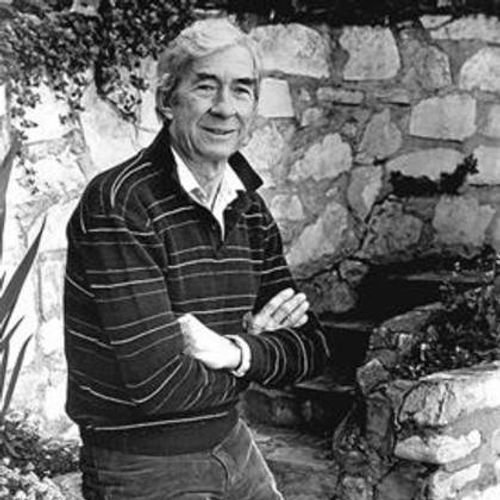
Alum Highlight: William Goyen
Another notable alum, William Goyen, attended Hogg in 1929 and became an acclaimed American author.
Goyen is best known for his novel The House of Breath, published in 1950. Rather than telling a straightforward story, the book reads almost like a poetic reflection. It evokes the people and places of a small Texas town remembered from childhood and explores deeper themes of identity, memory, and belonging.
Goyen’s own childhood experiences shaped much of his writing. His family moved to Houston in 1923 from a small rural town in East Texas. He lived at 614 Merrill Street and attended Travis Elementary before continuing on to Hogg Junior High. In a 1979 reflection published in the Houston Review, Goyen remembered living on a street where both ends led to schools—a detail that illustrates how closely neighborhood life and education were connected. He also remarked that even in the 1930s, Houston already felt busy and crowded!
After serving in World War II, Goyen returned to the United States and began his literary career in earnest. Following the success of The House of Breath and his first short stories collection, Ghost and Flesh: Stories and Tales, he received prestigious Guggenheim Fellowships in 1952 and 1954. These fellowships allowed him to spend time in Rome during 1954 and 1955, an experience that further enriched his creative work.
When he returned from Europe, Goyen lived for several years in New York City. During this period, he expanded into theater, writing plays and adapting his own fiction for the stage. Six of his plays were produced, and he received a grant from the Ford Foundation for theater writing.
Fun Fact: For those familiar with the 1990's sitcom Everybody Loves Raymond, in 1963 Goyen married Doris Roberts, who played the famed matriarch, Marie Barone. They remained married until his death in 1983.
Stop 7: Library and 3rd floor
Theme: From serving lines to storylines
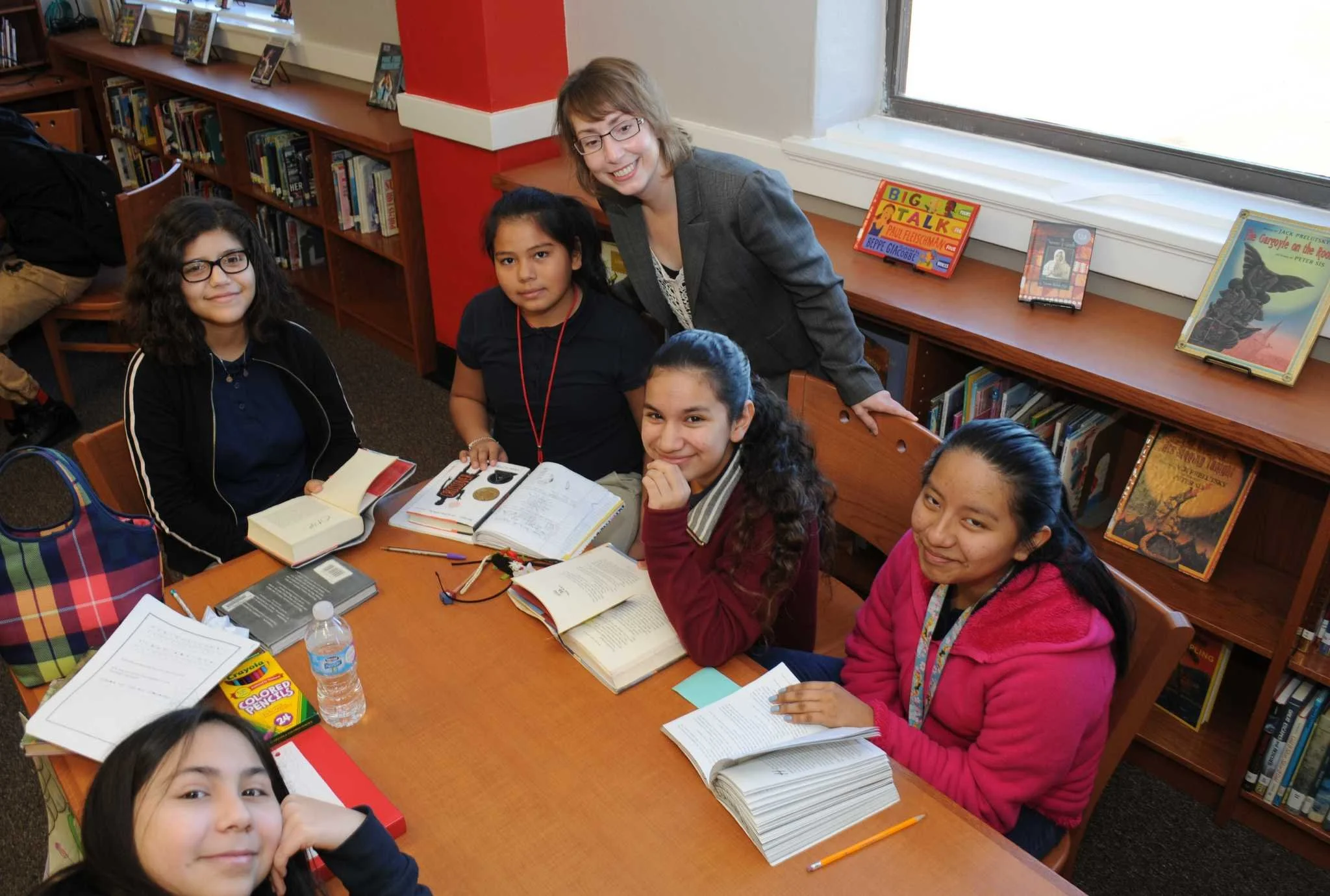
If you look around this space, you might be surprised to learn that it wasn’t always the library. When the Rollins Annex was completed in 1979, this room was converted into the school’s library. Before that time, this was actually the cafeteria.
Those interior windows along the wall mark where the serving line once stood, where students would move through to receive their lunches.
Just outside in the hallway you’ll notice a dumbwaiter. Before elevators were common in schools, this small lift was used to move food and supplies between the first and third floors.
In the early decades of the school—especially during the Great Depression of the 1930s—the first floor saw its share of theft. One common target was the pencil vending machines that PTA groups used as fundraisers across the country. A Houston Post article from October 14, 1927 even scolded the students responsible, writing that anyone who stole from the PTA pencil fund was, in the opinion of school officials, of the “lowest class.”
Today the space serves a very different purpose. The library was renovated in 2015 and dedicated to Naomi Pope, a beloved Hogg educator and counselor from the 1990s who was deeply committed to supporting students.
Several activities take place in the library - Journalism/yearbook club, bi-monthly coffee with the principal, testing and studying. Students and parent volunteers alike enjoy spending time with Ms. Chance and Ms. Brown!!
Point of Interest: Memorabilia to view
Point of Interest: Pictures of past principals on windows across the hall from the library
Stop 8: Room 307 – Step back 100 years
Theme: The rhythm of Hogg’s past takes root
As we step into Room 307, you might notice something a bit unusual—the gently sloping, tiered floor beneath your feet. This feature reflects the room’s original purpose, as it once served as a choir classroom, designed so students could be seen and heard more easily.
Originally, this space was actually twice its current size. Over time, it was divided into two classrooms to meet the changing needs of the school.
Take a look along the walls—you’ll see built-in bookcases and closets. These are not modern additions, but original features from the school’s construction in 1926, found in many classrooms throughout Hogg.
Even the wooden floor beneath us and the chalkboard frame at the front of the room are original elements, offering a tangible connection to the students who learned here nearly a century ago.
As you make your way downstairs and exit the building, take a look at the courtyard and take note of the pecan tree. James S. Hogg had a deep appreciation for pecan trees—fitting, as the pecan is the official state tree of Texas—and even had one planted at the head of his grave. In the years that followed, pecans from that tree were gathered, and a Texas A&M horticulturist envisioned a remarkable idea: to grow new trees from those pecans and plant them in schoolyards across the state. While there’s no confirmation that the pecan trees here at Hogg are descendants of that original tree, the story offers a meaningful connection to Hogg’s legacy and invites us to imagine his influence still taking root in schools throughout Texas.
Stop 9: 1st floor – East hallway
Theme: A past we honor, a future we share
As we come to the final stretch of our tour, this hallway represents more than just a passage—it reflects a long-standing neighborhood legacy of learning and community.
Take a moment to notice the Heights mural, dedicated in 2001. It commemorates both the arrival of a new millennium and over a century of community life, with Hogg Middle School at its heart.
Like any institution with deep roots, Hogg has evolved alongside the city of Houston. By the early 2000s, the surrounding neighborhood was changing once again, as families returned seeking the experience of a true neighborhood school—where students could walk together in the mornings and feel connected to their community. Around 2011, the “Learn Local” movement helped renew interest and investment in Hogg, supported by an active and dedicated PTO.
Our final stop is the Culinary Arts room. Notice the original built-in bookcases, a reminder of the school’s early days. Culinary arts was part of the curriculum when Hogg first opened in 1926, and its return as an elective in 2016 and currently taught by Ms. Goodman beautifully represents a full-circle moment—where tradition and modern education meet once again.